Showing posts with label Reviews. Show all posts

Thursday, March 29, 2007

[Blues] Katie Melua - (2005) Piece by Piece

Every now and then, not often, you get a genuine surprise. This is exactly what happened to me when I googled up Nine Million Bicycles, after hearing that cute, amusing song on the plane on my way back from Singapore. It turned out it was sung by a young artist by the name of Katie Melua, whom, I have to admit, I had never heard of before. I got hold of her latest CD and, expecting nothing more than a few amusing Pop songs, was utterly blown away when I heard one genuinely great Jazz/Blues song after another.

Katie Melua - Piece by Piece
Blues - 2005
1 CD - 12 tracks
Total running time: 44:38

What I was hearing was actually the work of a truely amazing singer, with a voice and style as sensuous and beautiful as the classic great female voices of Jazz and Blues.


Katie who?

After listening to the opening songs, I was eagerly going through the liner notes of the CD to try and figure out why I hadn't heard of this artist earlier as I found out that Piece by Piece was actually her second CD.

The net provided me with more information: Katie is apparently of mixed origins, born and raised in Georgia, then living in Belfast. Not surprisingly, Katie was first known in the UK, in fact, her first album Call off the Search was very successful there but went almost completely unnoticed throughout the rest of the world.

Despite the thick Irish accent Katie displays in interviews, she is actually quite eloquant, has interesting views on world matters, and doesn't subscribe to the standardized "European way of thinking", which is always refreshing to hear. Her origins probably have something to do with that, as they probably do with the rather literary and profound lyrics that surprise you in her songs.

Speaking of songs, it might be time to mention that Katie is a primarily a singer although she does play a little bit of guitar - basically strums a few chords on her nylon stringed electro-acoustic. Many of you (myself included) would already be running for the hills after that description. Luckily, and that's one of the many surprises this artist has in store for us, she is in no way "goofy" like a lot of the so-called professional singers. Her voice is soft yet without being week. From what I could tell in this CD, she creates intensity and expressiveness, not by screeming loudly and going into impossibly high tones, but by subtlely texturing her voice to fit the mood she wants to create and playing with dynamics, sometimes lowering her voice to a mere whisper.

The spark of interest

As I mentionned in the introduction, I first discovered this music on the plane. Air France, on that trip, had apparently forgotten to remove this song from their usual selection of appaulling old French hits. I whole-heartedly encourage them to make similar mistakes in future...

Anyhow, Nine Million Bicycles was the title of the song - nothing more than a catchy and cute love song at first listen. However, as the title maybe indicates, the song bares one question: How do you associate nine million bicycles and love? Well, there lies exactly what makes this little song special.

"Nine million bicycles" refers to how many of those transportation devices are being used everyday in Beijing which, appart from being an interesting and amusing fact, has a nice ring to it. I won't explain how the link to love is made - you'll have to listen to the song to find out - I'll just say that, associated with the lovely melody, the line "there are nine million bicycles in Beijing" is the perfect example of how lyrics, music and meaning can work together to create a really great song.

A genuine discovery

It's high time we had a look at the rest of the album which quite simply beats the hell out of Nine Million Bicycle - which was no slouch in the first place.

boggle

A voice as engaging live as in the studio

Here's a little video to illustrate Katie's skills out of the studio and on stage with just a guitar and a microphone. This a an unofficial live recording from an appearance on French TV.


Absolutely mind-blowing in my opinion. Powerful voice yet full of subtleties, sometimes down to just an intimate, spine-tingling whisper, accompanied by just a softly picked guitar, adding to the personal, and surprinsingly intense, quality of this song.

Tracklist

No.
TitleLen.
1
Shy Boy
3:28
2
Nine Million Bicycles
3:15
3
Piece by Piece
3:24
4
Halfway up the Hindu Kush
3:06
5
Blues in the Night
4:12
6
Spider's Web
3:58
7
Blue Shoes
4:39
8
On the Road Again
4:38
9
Thank You Stars
3:39
10
Just Like Heaven
3:35
11
I Cried for You
3:38
12
I Do Believe in Love
3:00

Read more...

Sunday, January 14, 2007

[Jazz] Jimmy Raney - (1976) Live in Tokyo

Finally, our second real Jazz review has arrived. Our maestro for this class will be Jimmy Raney, a personal favourite of mine. This concert recording, featuring a more extensive intrument line-up than Barney Kessel's Plays for Lovers, will hopefully give you a more lively impression of the unique atmophere that Jazz creates.

Jimmy Raney - Live in Tokyo
Jazz - 1976
1CD - 11 tracks
Total running time: 57:21

This great live performance offers a nice mix of melodic, romantic songs and more lively, up-tempo tracks masterfully interpreted by Jimmy Raney and his band.


Introduction

Jazz used to be a festive type of music, an aspect which this CD illustrates perfectly. After the pleasant, yet somewhat academic playing on Barney Kessel's compilation, this live recording brings you the 'real thing'.

Technically, the recording does a great job of making you feel part of the audience. The band line up includes more instruments, such as a piano, more adventurous drums and a saxophone. Additionally, Jimmy Raney displays his talents both as a reflective, slow and complex chord player and as an up-tempo beepop style player. The two make this concert a great combination of feel-good and moody, laid-back atmosphere.

A walk through this performance

The show starts off, as do a lot of shows in general, with some up-tempo favourites such as How about You and Watch what Happens to get the public going. Always refreshing to hear those few openers. Just goes to show you that you can also use Jazz to get yourself kicking again after an exhausting or depressing day. In Anthropology, Jimmy displays his speed skills.

Later on, things slow down and Jimmy gets right into it with a really wonderful version of Autumn Leaves or Les Feuilles mortes as the original title is. You'll also find yet another version of Here's that Rainy Day. Jimmy's interpretation is livelier and grittier; I'm pretty sure most of you wouldn't recognize it without some insider hints. Another notable interpretation on this record is the one of Charlie Parker's classic, Just Friends.

Towards the end of the show, the saxophone makes its entry and the band play some more cheerful, croud-pleasing songs.

To sum it all up

These performances don't require any deep analysis. Just put the CD on, one lazy Sunday afternoon and I'll bet ya, it'll have you tapping your feet or even doing a little dance in no time.

They're simply a great example of the uniqueness of Jazz. Jimmy and his band manage to create this jolly, energetic atmosphere, yet maintaining the characteristic laid-back sound of Jazz. It just shows you: you can have lots of fun without even breaking into a sweat.

More of Jimmy

Jimmy is one of the 'old dogs' of Jazz guitar, and also one of my favourites. He has a classic, old fashionned playing style which tends to be punchier, grittier than the more modern players. He's a great example of how real Jazz used to sound.

The wonderful thing about him is that he's also excellent at playing the modern, reflective, more complex, slightly intellectual music which I also apreciate. With his background as a classic Jazz guitarist, he manages to pack loads of emotion into the sometimes 'empty' sounding modern compositions, as he does to perfection in one of his last releases, But Beautiful.

Track list

No.
TitleLen.
1
How about You
5:22
2
Darn that Dream
5:02
3
Anthropology
4:06
4
Watch what Happens
3:43
5
Just Friends
4:22
6
Autumn Leaves
4:09
7
Stella by Starlight
3:47
8
Here's that Rainy Day
6:03
9
Cherokee
5:12
10
Grovin' High
7:45
11
Blue 'n Boogie
7:47

Read more...

Monday, March 27, 2006

[Jazz] Barney Kessel - (2003) Plays For Lovers

Okay, you've had a short break since our encounter with Chris Rea - time enough to get mentally prepared with some authentic Jazz. We'll start slowly with this recently-released compilation of classic, 'from-the-book' Jazz guitar.

Barney Kessel - Plays for Lovers
Jazz - 2003
1 CD - 16 tracks
Total running time: 1:07:33

A collection of easy-listening, romantic Jazz favourites smoothly and cleanly played by B. Kessel. Melodic and laid-back electric guitar to accompany your long Winter evenings.


Why start with Barney Kessel?

Barney Kessel was the first Jazz guitarist I heard. In fact, the first Jazz CD I got was this particular one. Given my current attitude towards Jazz, I figured I couldn't go far wrong by making you follow my footsteps.

I won't bore you with Barney's biography or stuff you full of historical facts - you can always google those up if you like - I'll give you my personal impression of his artistic characteristics. For me, he's the 'good boy' of Jazz guitarists: a very smooth and clean style, staying very melodic and accessible. From what I've heard of him, and this is one of his best qualities, he tends to stay quite conventional and concentrate on the music, not wander off into crazy virtuoso feats like many others. He's also equally capable in the two major Jazz guitar styles: playing single note solos and stringing together successions of those fascinating and monstruously complex Jazz chords. You'll be able to apreciate both on this compilation.

For these reasons, I think Barney will give you a nice smooth start in Jazz and Jazz guitar in particular. Later, we'll discover some more exotic and wilder artists.

Before with start - basic Jazz background

As indicated, this compilation was released in 2003 but you'll soon get to know that the vast majority of good Jazz guitar music, all artists considered, was recorded between 1960 and 1965 (give or take a few years). Yes, it really was that short but there were so many brilliant artists around that, even today, we keep on listening to them and rediscovering them.

Another thing that's important to know about in Jazz is the term "Standard". A Standard is usually a popular, often romantic and simple song that is used again and again as a basis for a Jazz piece. You'll see the same old Standards cropping up all the time. However, contrary to what you might be thinking, there is still lots of variety to be found. Jazz being what it is, the same Standard played by two different artists sounds completely different, so much so that the original song is often unrecognizable by the untrained ear.

This CD contains a number of Standards you'll definitely be seing again. You might even know some of them in there original form: I'm Glad There Is You, My Funny Valentine, You Stepped out of a Dream, etc.

How to enjoy this CD

This time, I won't be going over individual songs but just talk about the general athmophere created by this collection of pieces. All the tracks are of similar style: easy-listening, romantic Jazz songs. All are instrumental with the electric Jazz guitar being the central point. The band is mostly composed of the classic, well-proven Jazz trio: Guitar + Bass + Drums, but there is the occasional appearance of a piano or a xylophone.

Given these characteristics - soft, similar-style tracks, simple and intimate band - I could bet most of you are thinking, "hey, this could make great background music for my work/reading etc." I suppose it would but I have to tell you, it's shameful waste of the complexity and profoundness of this music. This music contains lots of hidden subtleties which is the wonderful thing about Jazz: you can own a CD for 10 years and still discover new things about it everytime you listen to it. The downside is that apreciating it requires a fair amount of work and concentration. Jazz is a great way of learning how to listen. Listening to music is not a background thing while you do something else, it's an activity in itself. Just put that little bit of effort and concentration into it when you put a CD on, you'll be amazed at how rewarding it is in the long run.

Here's a suggestion that works a treat with this particular CD: you're home from work, you're alone, it's cold a dark outside. Find yourself a comfy armchair, dim the lights and put this CD on. The music will fill the emptiness and silence in a flash and replace it with the unique and fascinating athmophere of Jazz. Keep on sitting there, and concentrate on the music. Try and feel each note, feel its texture, let it vibrate inside you and move you. Keep this up for a while and the world outside, along with your preocupations, worries, needs will disappear and you'll find yourself transported to a world of pure well-being where you are alone, being gently stroked by the softness and harmony of the music. I'm sure this sounds all very corny but just give it a try. You'll be amazed how well it works.

I must warn you though, this kind of thing is adictive. You'll soon be desperately hunting for more Jazz CDs and cursing every little noise from your neighboors that upsets the athmosphere and harmony of your living room.

This particular CD is also quite addictive in that it seems to get better and better towards the end. You'll find some wonderful interaction, or 'interplay' as they say in the Jazz scene, between guitar and bass in the final tracks such as You Go to my Head and I'm Through with Love. The Bass has this hypnotizing character the guitar has. Having enjoyed the last few tracks so much, you'll be compelled to play the CD again from the beginning and pay even more attention on the first few tracks, thinking you might have missed something.

And, Jazz being what is it, you will find something you missed. And again the time after that...

Tracklist

No.
TitleLen.
1Embraceable You3:24
2
I'm Glad There Is You
5:36
3
What Is There to Say
3:36
4
Satin Doll
6:33
5
My Funny Valentine
4:51
6
This Guy's in Love with You
5:18
7
Angel Eyes
4:42
8
Just in Time
5:00
9
My Reverie
2:33
10
Love Is Here to Stay
3:27
11
Tenderly
3:15
12
It Could Happen to You
4:25
13
My Old Flame
3:39
14
Laura
3:26
15
You Go to my Head
4:24
16
I'm through with Love
3:17

Read more...

Sunday, January 29, 2006

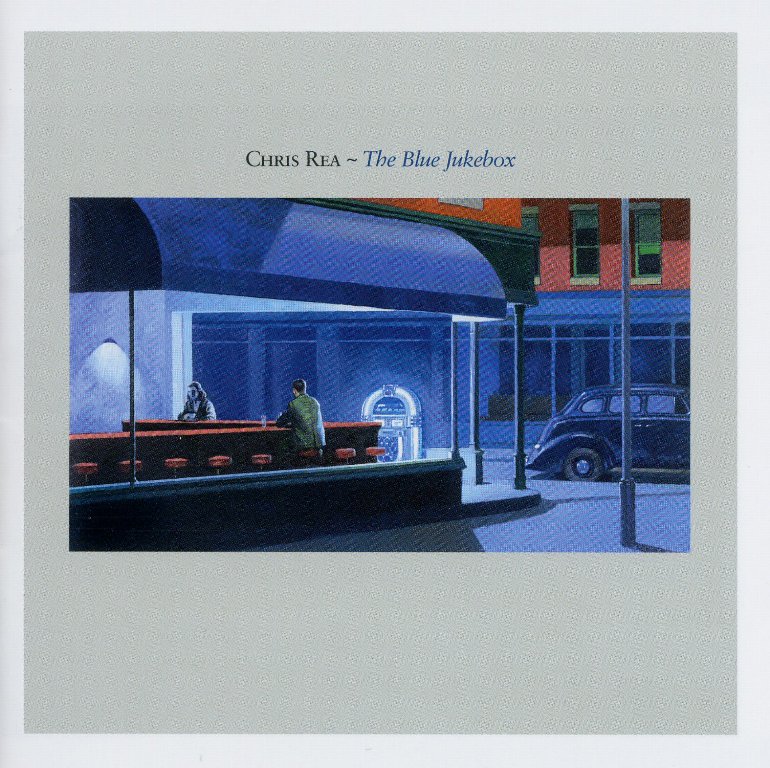
[Guitar] Chris Rea - (2004) The Blue Jukebox

On the twisty, slippery road to appreciating Jazz, I think Chris Rea will be a big help to us. His career took a radical turn a few years ago when he decidedly moved away from popular music. This album, to my mind one of the best he recorded in his transitional phase, is the perfect link for us between smokey voiced 'bad guy' Blues like Calvin Russell and Jazz.

Chris Rea - The Blue Jukebox
Guitar - 2004
1 CD - 13 tracks
Total running time: 1:06:56

Chris adds a taste of Jazz to The Blues in this CD where he growls in a deep, smokey voice with his usual strong bass line and slide guitar licks but in a more laid back, reflective mood.


Chris Rea's career

Most people probably know Chris Rea as the guy you hear on the radio every year around Christmas time with his Driving Home for Christmas. People who were alive and in contact with the world in the 80s will know him as the artist behing big popular hits like The Road to Hell, Auberge, Josephine, Looking for the Summer... After his initial huge success, he disappeared completely in the 90s and produced some truely AWFUL albums.

His great comeback came in 2002 when he released Dancing down the Stony Road, recorded "live in the studio", i.e. one take tracks. Chris created his own record company called Jazzy Blue and released an extended version of that album with his new company. He has released a whole flurry of albums since, now having the freedom of release what and when he wants. The result is, in my opinion, a dramatic improvement in his music. He has now turned to a genre you could call "Dark Blues" and The Blue Jukebox is a great example of it.

Overall character of the album

Chris is faithful to his usual sound instrument-wise in this album: his voice, slide guitar, bass and a slow blues shuffle on the drums. The novelty is the appearance of a saxophone which occasionnally softly fills in between the guitar and the voice, adding a destinct Jazzy tone.

Athmosphere-wise, The Blue Jukebox is Dark Blues at its best. Technically, the music is simple, very rootsy, no ornaments, no excessive multiple tracking. Every sound you hear has its function and would be noticeably missed were it to be left out. The mood produced is slow, weary, dreamy. The album musically describes to perfection the feeling of "being blue". The difference to traditional Blues is that it's not the groans of someone trying to free himself of this unfortunate state of mind but simply a description of it and a much more expressive and moving description than words. The Blue Jukebox is a very accurate title for this CD: it is the sound of "blue".

Highlights of this CD

The most easily likeable track is certainly Long Is the Time and Hard Is the Road. Lyrically the song is quite similar to Chris's old hit The Road to Hell. He criticises the way society works, showing how fake and meaningless our way of living is, leading us to self negation. However, unlike the old hit, he doesn't express his anger and his wish to change this, he simply describes the sadness he feels towards the situation. Musically this is expressed by a strong, warm and slow bass line. The anger which used to be his screaming, screeching guitar, is replaced by a gently weaping slide guitar. I must say you have to give credit to Chris for his performance on guitar on this album. It takes a great deal of subtely to express deep sadness and yet keep the sound gentle and soft.

Steel River Blues is another of my favourites on this release. Musically it's quite similar to Long Is the Time... but underlines a certain fascination in the feeling of sadness. He speaks of "The only thing we never got to do
Kick away
Those Steel River Blues"
as if he was trapped in his sadness. As if he couldn't bear being happy, that he prefered staying in his familiar and gentle world of sadness.

The only song that expresses desire to escape the world of the Blues is Restless Soul. Contrary to all the other tracks, the rythm is punchy: the bass angrily beats a very restless rythm. You get the impression the person's soul is damned, condemned to be imprisonned in sadness: "Oh you gotta give somethin'
'Cos it screams and it cries
This restless soul"
The song ends with a really impressively well executed duo of saxophone and slide guitar.

Last words

I think this album is a great introduction to the bluesy/jazzy mood. In his lyrics, Chris often speaks of a "blue world" or "a little piece of blues" as if the blues could be sensed in every situation. Even in a happy event, you can catch a glimpse of sadness which you can be fascinated by, attracted by because of its familiarity giving you a sense of security.

The song Paint My Jukebox Blue offers a fatalistic but also humourous point of view on this. Confronted with a serious problem a person goes and even gratefully escapes to familiarity of the "blue world". In the song, the person decides to paint his jukebox blue which is a stupid thing to do really but, symbollically, very interesting: "Since you been gone
I've been wondering
What to do
I guess I'll paint
My Jukebox
Blue...."

Tracklist

No.
TitleLen.
1The Beat Goes on4:34
2
Long Is the Time Hard Is the Road
5:19
3
Let's Do It
5:04
4
Let It Roll
5:01
5
Steel River Blues
4:36
6
Somebody Say Amen
6:13
7
Blue Street
4:50
8
Monday Morning
4:07
9
Restless Soul
5:53
10
What Kind of Love Is This
6:39
11
Paint my Jukebox Blue
4:03
12
Baby Don't Cry
5:25
13
Speed
5:04

Read more...

Friday, December 23, 2005

[Guitar] Calvin Russell - (1991) Sounds from the Fourth World

Let's move away from Mark Knopfler but stay in familiar territory with this second CD. This album also very guitar orientated but has a rawer, rootsier, more Texas/Country/Blues feel to it. A good prelude to the Blues up ahead in our reviews, while staying very melodic and accessible.

C.R. Sounds from the 4th World
Guitar - 1991
1 CD - 11 tracks
Total running time: 49:31

The pains and groans of a man hard done by life, brought to us by a deap, growly voice accompanied by a roughly strummed acoustic guitar and a heavily distorted electric guitar.


The artist & the album

The album's cover gives a pretty good impression of what Calvin Russell looks like and indeed, sounds like: rough, dirty, bitter, hardened by life. As far as I was able to find out, Calvin is from Texas, an ex-convict, and in general, a rather ragged fellow.

Now from that description, you might be expecting some typical 'bad guy' music but that's not to be found anywhere on this album at least. Calvin communicates his ideas quite subtely, using both musical and lyrical effects. However, unlike Mark's recent work, it stays very raw, with some rough, hard sounds and dark, bluesy melodies. I think the primary quality of this album is that it's honest: it's a real bloke who's been through a lot, telling us stories from his life without pretending to be something he isn't. So the music, just like the man, is rough around the edges, sometimes clumbsy but allthemore convincing for that very reason.

To his advantage, Calvin has a very deep growly voice which fits perfectly with the themes of his songs. Along with his rough, clumbsy acoustic guitar strumming and his howling, screaming electric guitar licks, it gives the album a very characteristic sound, a sound giving the ideas and the lyrics a certain credibility, a credibility one of these young kid superstars with their flashy shows and fancy tricks could never have.

A few favourite songs

The second track on the album is Last Night, the story of a guy who is obsessed with some woman and goes out looking for her in the bars at night to see what she's doing, who she's with. While the subject is neither very profound nor very original, the song is very nicely pieced together. The textures are good: rough and dirty as always with Calvin but they fit particularly well in this situation where an old, rough looking dog is running after some smart looking lady. The lyrics are quite vague but mention the important things like "Afraid I would find you, Afraid you couldn't be found" which is the typical thought you have when you're looking for someone. Finding her would be awkward and painful and not finding her would be just as bad because you wouldn't know where she is and start imagining the worst things. The details of the situation are not explained which allows everyone to interpret it how it suits him but the feelings are explained in detail: bitterness in the verse "The kind where you gotta dress right or they won't let you in" and pain and anger in "And you do the same damn thing to me". That last verse is one of the key moments in the song, the singing is particularly emotional and it's followed by a screaching, screaming lick on a heavily distorted electric guitar.

The next song, One Meat Ball, is one of my all time favourites when it comes to the 'Blues feel'. A poor fellow finds a dollar bill somewhere and wanders around restaurants to see what he can get to eat for 1 dollar. It turns out all he can get for that price is 1 meat ball. The situation is very silly but the thoughts racing through the little man's mind as he sits alone at his table and timidly orders his 1 meat ball aren't at all. Obviously, the waiter laughs at the poor guy when he takes the order and makes a big joke of it with the rest of the staff. There are two versions of this song on the album: acoustic with saxophone and an electric one. Each has its own qualities but the musical textures in both, wonderfully express how this little man sinks down deeper and deeper into his chair and into the floor in total humiliation, as the staff and the other guests in the restaurant laugh at him. That is, for me, the perfect example of what the Blues is about. Musically, the song hasn't got much to do with the Blues but the theme, a simple, everyday situation which emotionally turns into someone's worst nightmare, is the essence of any Blues song. One Meat Ball is the kind of song that makes you feel less ridiculous when you feel down just because the girl at the cash desk didn't say hello when you went shopping in the morning.

Calvin Russell's most successful song is Crossroads which is also on this album. It's a long acoustic thing which builds up to a dramatic solo at the end. The story is a guy standing at some crossroads wondering which road to take, an image for someone thinking over an important decision he has to take in life (just like that very tiresome Robert Frost poem, The Road not Taken). The voice is the star in this song. Calvin's deep, dark voice reflects the seriousness of the decisions to take in life, and the desasterous effects they can have. The voice is accompanied by a slow, reflective, acoustic riff all the way. The song ends with a magnificent acoustic guitar solo.

Tracklist

No.
TitleLen.
1You're my Baby3:45
2
Last Night
4:44
3
One Meat Ball
3:54
4
Crossroads
7:32
5
Maybe Someday
5:34
6
Rockin' the Republicans
4:40
7
Baby I Love You
2:21
8
Love Stealer
4:12
9
You Don't Know Me
5:07
10
Down Down Down
3:41
11
One Meat Ball (acoustic)
3:57

Read more...

Monday, December 19, 2005

[Mark] Mark Knopfler - (2004) Shangri-La

For a first review, I'll go for a nice, easy, melodic and accessible one that will also please all those who think I only listen to Mark stuff.

Mark Knopfler - Shangri-La
Mark - 2004
1 CD - 14 tracks
Total running time: 1:06:22

A relaxing, heart warming album telling us stories from the 60s. Mark sings in a new mellow voice accompanied by rootsy, acoustic rythms, punctuated by his usual smooth electric licks.


5:15 AM, the opener

The album kicks off with 5:15 AM, a track which, in itself, sets the atmosphere for the rest of the CD. The song starts with Mark lightly strumming his Les Paul. Soon, he starts singing in a dreamy, nostalgic voice. The song is the story of a miner coming home from his night shift, going past deserted schools and pubs on his bicycle in the wee hours of the morning. The scene is perfect for expressing thoughts about how coal mining affected the lives of simple people of northern England.

As the lonely miner's thoughts wander into darker and darker areas: a murder, the greed of the business men from the South, his family's desperate situation, the backing instruments gradually kick in, giving a stronger and more dramatic character to the song. This is a brilliant example of how music and lyrics work together. A minor chord rings out together with the word "Alone" in the verse "Together and alone" which in tern rhymes with "Paid the price of coal". You not only understand intellectually, through the lyrics, what is being said, you also feel the bitterness, the sentiment of betrayal the miner is expressing through the choice of chord and the rhyme.

Eventually, the backing disappears a we are left once again with Mark, alone, softly strumming his Les Paul. This is another great piece of composing: after the anger, the dramatic, tense middle part Mark reminds us, musically and lyrically, that this song is not about big companies, not about business men, not a bout greed and exploitation. It's about a simple man, alone, cycling back to his family after a night in the mine...

A pick of the rest

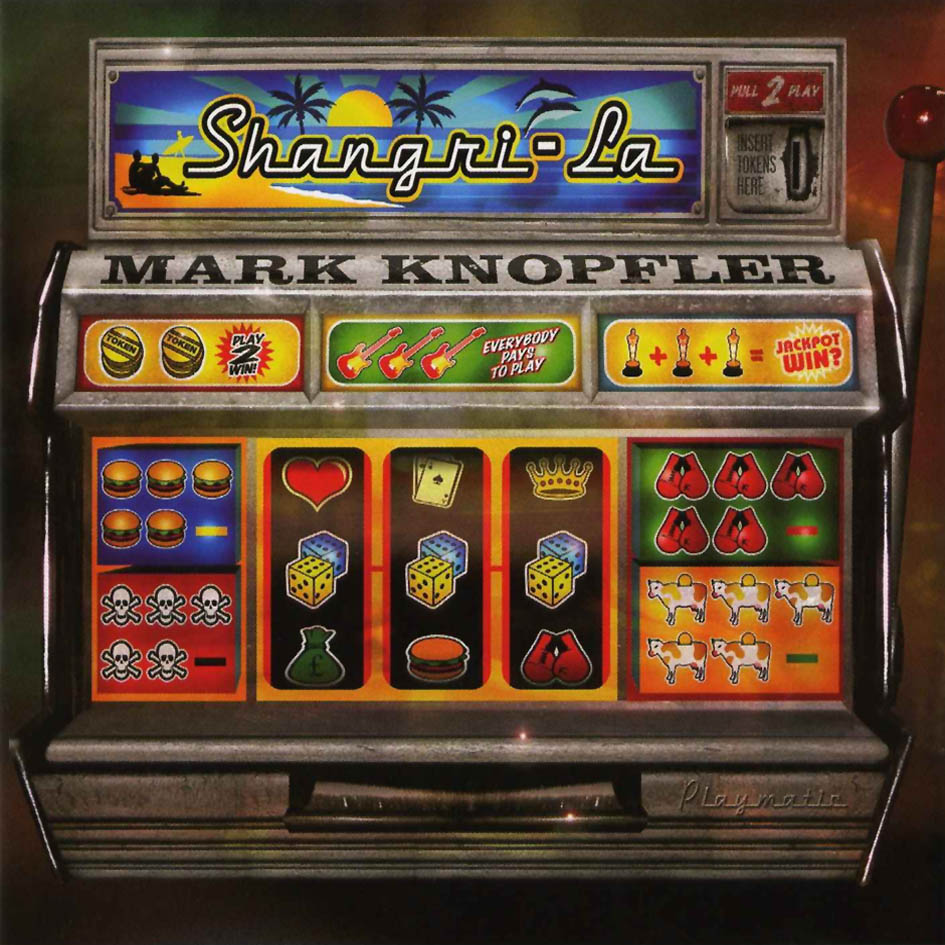
The album continues in the same style. Sucker Row, The Trawlerman's Song and Back to Tupelo are musically similar with an acoustic guitar in the background and occasional small riffs on the Les Paul in the foreground. They also have in common that they are all about opposites. Sucker Row is about the phenomena of people (suckers) in the US, sitting in rows in front of coin machines (such as the one featured on the CD cover) in the hope of making some easy money. While this behaviour is presented as pathetic, the song also suggests, very subtely, that these simple people are actually the most honest ones: "I never look down on a sucker stake; They all pay the bills". Back to Tupelo, my personal favourite of the album, has a similar subject: young talented musicians who are taken over by a desire to go to Hollywood. Words and music are perfectly adjusted in the chorus "Oh, it's a ways to go; Back to Tupelo" meaning 'Go for it, if you like, but the way back home is difficult'.

The Trawlerman's Song is a more up-tempo track with a strange mixture of melancholy and happiness: the story of a sailor and his journeys with his mates who simply wants to come home to his beloved. This song finishes on an intreeging outro where Mark sings a very light and cheerful "La la la" yet adding more than a touch of sadness with his guitar notes. This leaves everything very much open to your own free interpretation which is one of the best things about music.

The title track Our Shangri-La marks a turning point in the album. In Our Shangri-La and Everybody Pays, the Les Paul disappears and 'Spaghetti guitar' takes its place: the kind of sound you'd expect to hear in Western movies. Mark uses that kind of imagery to express other ideas. The album continues with more varied tracks but of equal quality and interest both musically and lyrically. I'll let you discover those on your own. I hope my views on the first tracks will insite you to analyse them in detail - they have lots of hidden subtleties

A word about the artist

Mark Knopfler is, of course, better known for his guitar hero days with Dire Straits. For those of you who know that, I urge you to listen to this album with an open mind. Do not expect impressive guitar solos, you will not find any.
For those who are not familiar with Mark's earlier work, simply enjoy (and comment!). I'm always fascinated to hear what people think of Mark when they start with his later work.

Tracklist

No.
TitleLen.
15:15 AM5:54
2
Boom, Like That
5:49
3
Sucker Row
4:46
4
The Trawlerman's Song
5:02
5
Back to Tupelo
4:31
6
Our Shangri-La
5:41
7
Everybody Pays
5:24
8
Song for Sonny Liston
5:06
9
Whoop De Doo
3:53
10
Postcards from Paraguay
4:07
11
All That Matters
3:08
12
Stand up Guy
4:32
13
Donegan's Gone
3:05
14
Don't Crash the Ambulance
5:06

Read more...